
On 25 April 2026, a series of coordinated attacks of unprecedented scale simultaneously struck several Malian cities, including Bamako, Kati, Mopti, Gao and Kidal. These assaults were carried out by an alliance between the Group for the Support of Islam and Muslims (JNIM), affiliated with Al-Qaeda, and the Azawad Liberation Front (FLA), the armed wing of the Tuareg separatists. The fighting reached the very heart of the junta’s military apparatus: Kati, the stronghold of the Malian Armed Forces, was directly targeted. The death of Defence Minister Sadio Camara was reported, while elements of Africa Corps reportedly withdrew from certain areas under pressure. France, Canada and the United Kingdom advised their nationals to leave Malian territory. These events constitute a turning point: they signal not only a reconfiguration of armed alliances in Mali, but also reveal the failure of the military reconquest strategy pursued by the junta and its Russian partners since 2021.
Since the withdrawal of French forces from Operation Barkhane in 2022 and the strengthening of the partnership between the Malian junta and the Wagner Group, Mali had already been experiencing a period of profound reconfigurations that raised questions about the viability of its security architecture. The capture of Kidal by the FAMa in November 2023 had been presented as a historic victory. The events of 25 April 2026 brutally demonstrate that this victory was tactical rather than strategic. The north of the country remains a space of fragmented sovereignty, and what is now unfolding in Mali concerns more than Mali alone: the entire security architecture of West Africa is now being affected.
Historical Depth: Islamisation, Identity Reconfigurations and Sahelian Dynamics
To understand the Malian crisis in its full dimension, it is necessary to place it within a long historical perspective. The gradual Islamisation of the Sahel and West Africa took place over several centuries through multiple and non-linear pathways: trans-Saharan trade, Sufi brotherhoods, and reformist jihads during the eighteenth and nineteenth centuries. These processes produced profound reconfigurations of political, linguistic and cultural identities across the Sahelo-Saharan belt. The Ghana, Mali and Songhai Empires had already integrated Arabic-speaking and Berber-speaking populations into stable multi-ethnic political formations. What we are witnessing today is therefore not a radically new phenomenon but a reactivation, in an armed and radical form, of long-term historical dynamics.
What specialised historians have documented is that the spread of Islam in the Sahel has always been accompanied by shifts in power relations between sedentary and nomadic communities, and between Saharan and Sudanian populations. The Tuareg, Arab and Berber groups of northern Mali have historically maintained alternating relationships of negotiated integration and armed rupture with the central governments in Bamako. The 2012 rebellion forms part of this long sequence, while adding an unprecedented transnational and ideological dimension driven by jihadist networks.
The analytical mistake would be to interpret these dynamics as a coordinated conspiracy across a unified Arab world. The reality is more fragmented: actors with distinct agendas secular separatists, transnational jihadists, traffickers and Gulf states exploit the same fractures without necessarily following a common strategy.
Nevertheless, these dynamics produce a cumulative effect that Sahelian states cannot ignore. The expansion of armed groups from northern Mali into the centre of the country and subsequently toward the peripheries of Burkina Faso and Niger follows a logic of filling the vacuum left by the withdrawal or weakening of state authority. It is this logic, rather than any demographic intentionality, that must be analysed rigorously.
A Territory of Discontinuous Sovereignty
The proclamation of Azawad by the National Movement for the Liberation of Azawad (MNLA) in 2012 constitutes the founding rupture of Mali’s contemporary crisis. It resulted from a combination of structural and conjunctural factors: the influx of Libyan weapons following the fall of the Gaddafi regime, the historical marginalisation of Tuareg communities by successive governments in Bamako, and the tactical opportunism of jihadist groups that temporarily used the separatist rebellion as a lever for territorial expansion. This composite genesis invalidates any monolithic interpretation of the situation.
The notion of continuous sovereignty has in practice been inoperative across much of Malian territory since 2012. It is not so much the area formally controlled by the state that determines its legitimacy as the quality of state presence in supposedly controlled spaces: the delivery of basic services, administrative presence and access to justice. Field studies conducted by the FrancoPaix Centre and the Stockholm International Peace Research Institute show that this presence remains extremely limited across large portions of the Mopti, Ségou and Timbuktu regions.
The 2015 Algiers Agreement, the product of lengthy international mediation, was intended to structure a negotiated resolution to the crisis. It remains formally in force but has been effectively emptied of substance since the junta’s unilateral rupture with the signatory armed groups in 2023. This rupture accelerated the reconfiguration of armed alliances in the region, particularly the tactical rapprochement between the CSP-PSD and JNIM around their shared opposition to the FAMa and their Russian partners. The attacks of 25 April 2026 precisely embody this rapprochement: Tuareg separatists and jihadists coordinated their operations nationwide, simultaneously targeting both the north and the political heart of the country.
It is also important to distinguish the dynamics of the north from those of the centre of the country. In the Mopti and Ségou regions, violence is not primarily driven by separatist groups but rather by a complex interaction between pre-existing agro-pastoral conflicts, the presence of jihadist katibas, and cycles of communal revenge. This reality of central Mali is analytically distinct from the northern question and requires different conceptual tools.
The Reconfiguration of Regional Balances: AES, ECOWAS and the Wagner Factor
Withdrawal from ECOWAS: Institutional Rupture or Tactical Repositioning?
The withdrawal of Mali, Burkina Faso and Niger from ECOWAS, formalised in 2024 through the creation of the Alliance of Sahel States (AES), constitutes a structural change in the regional security architecture. By positioning themselves outside the framework of collective intervention provided for under the ECOWAS Protocol on Non-Aggression and Mutual Assistance, the three Sahelian states weaken multilateral response mechanisms to transnational security crises. It is important to recall that ECOWAS contributions were widely perceived as insufficient, almost non-existent and ineffective.
What AES leaders present as emancipation from neo-colonialism can be more accurately analysed as a tactical repositioning aimed at freeing their regimes from democratic conditionalities. The continued payment of contributions to the African Union by these same states demonstrates a selective instrumentalisation of multilateralism: organisations whose mechanisms impose constraints are abandoned, while those whose resources remain useful are retained. This posture creates new vulnerabilities: withdrawal from the ECOWAS framework deprives AES states of operational security cooperation instruments precisely when the jihadist threat is expanding toward coastal states. It should nevertheless be recalled that although ECOWAS adopted action plans, including the creation of a standby force to counter the growing threat, its deployment has suffered from delays and funding shortages.
Partnership with Africa Corps: Security Logic and Political Economy
The presence of the Wagner Group renamed Africa Corps following the death of Yevgeny Prigozhin in August 2023 in Mali does not represent a simple substitution of military partner. It is accompanied by a reconfiguration of access channels to the country’s gold resources and by documented pressure on civic space. Several reports by the United Nations Panel of Experts on Mali have highlighted serious human rights violations attributed to both the FAMa and Russian paramilitary elements, notably during the Moura operations in March 2022.
Africa Corps operates according to a mining concession model that enables it to finance its operations without direct dependence on the Malian state budget. This financial autonomy reduces Bamako’s ability to exercise effective control over the activities of Russian paramilitary forces and creates grey areas within the operational chain of command. The events of 25 April reveal an additional limitation of this partnership: confronted with simultaneous attacks on several fronts, elements of Africa Corps reportedly withdrew from certain areas, raising fundamental questions regarding the operational reliability of this partner during moments of maximum crisis.
The Limits of an Ethnicised Reading
Any attempt to analyse the Malian crisis through the prism of racial antagonism or systematic demographic substitution runs up against the extreme complexity of local identities and the diversity of positions within each community. The Tuaregs do not constitute a unified political bloc: some fight alongside the FAMa, others have joined JNIM for reasons that have more to do with economic calculations than ideological solidarity, while others maintain autonomist positions without adhering to the jihadist project. Bilal Ag Acherif, a leading figure of the CSP-PSD, embodies a secular separatist position that is radically different from that of Iyad Ag Ghaly, leader of JNIM, whose project is primarily theocratic and whose recruitment base is multi-ethnic. The coalition of 25 April between the FLA and JNIM illustrates precisely this complexity: two actors with opposing political projects, united by a shared tactical opportunity rather than by a common identity.
The confusion between ethnic belonging and armed affiliation is not only analytically incorrect but also politically dangerous: it fuels dynamics of collective stigmatisation and communal reprisals that further intensify the cycle of violence.
The intercommunal violence affecting central Mali stems from centuries-old pastoral and land-related dynamics that the presence of armed groups has exacerbated without being their original cause. Economic marginalisation, the absence of the state, and the brutality of security forces constitute the key explanatory variables, far more than religious or ethnic affiliations. The region’s long history, marked by exchanges, marital alliances and economic complementarities between Saharan and Sudanian communities, contradicts any simplistic reading of a natural antagonism between populations.
The Danger for Coastal Sahelian States: Pressure Through Population Displacement
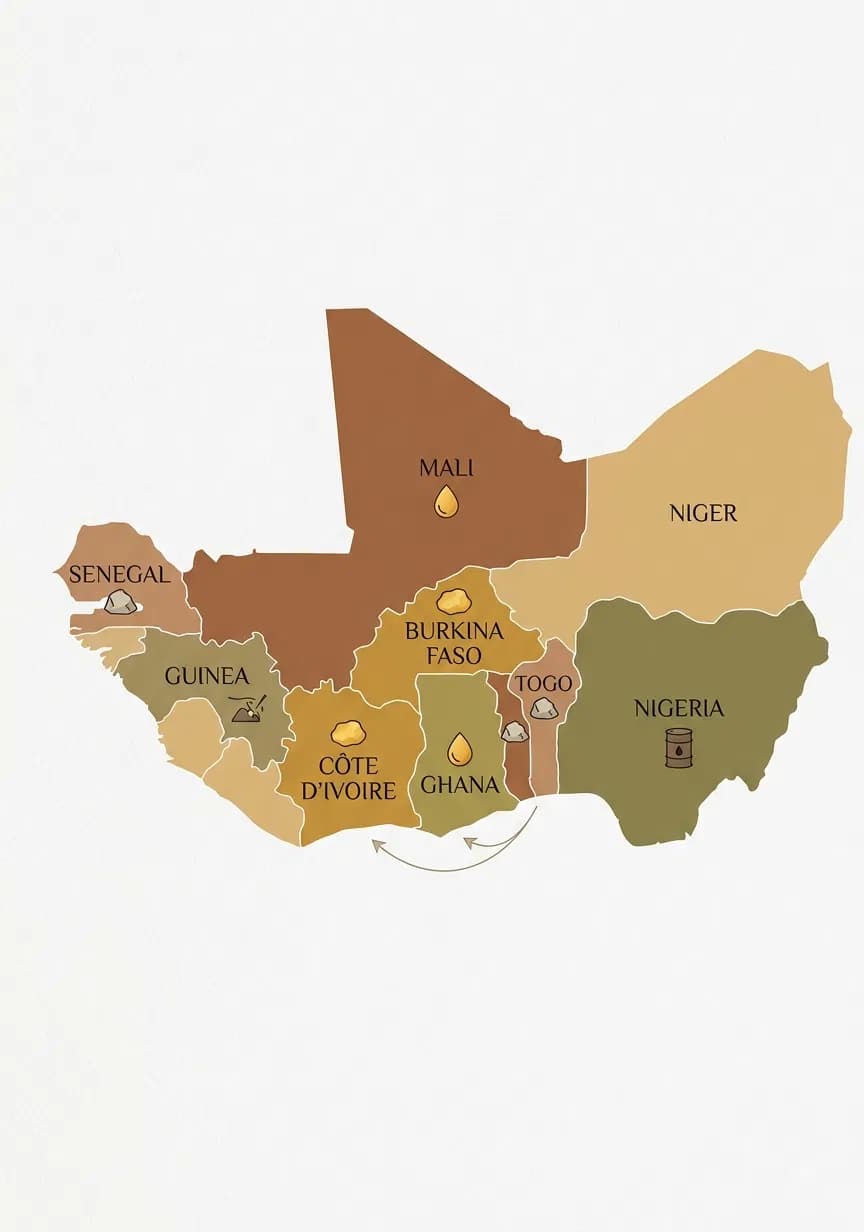
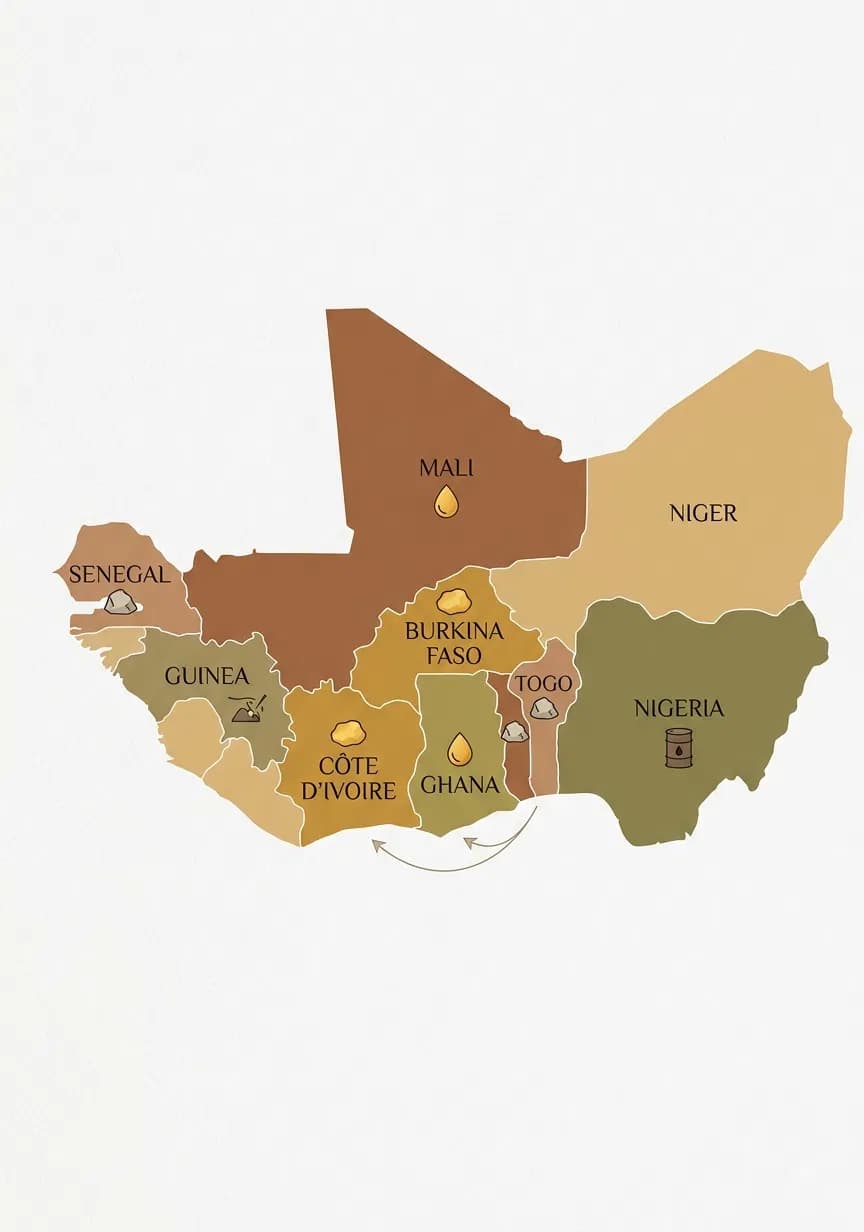
The advance of armed groups from northern Mali towards its southern peripheries produces an effect that neighbouring states cannot ignore: the forced displacement of civilian populations toward the south. However, this displacement should not be interpreted simply as collateral damage resulting from violence. It may also correspond to the very agenda of these groups, which seek the gradual occupation of territory through the prior emptying of the populations that inhabit it. The logic is one of conquest through dispossession: making territory uninhabitable for its residents, pushing them toward neighbouring countries, and settling in the space thus vacated.
This is precisely the strategy reflected in the Gaza context, where the demographic pressure exerted on Gaza’s population by Israel sought to push them towards Egypt in order to create a territorial fait accompli. The analogy is not perfect in either its causes or its actors, but the structure of the logic is comparable: population displacement is not a secondary effect of war; it is a tool of war.
From this perspective, forced migration flows toward Côte d’Ivoire, Ghana, Togo, Benin and Senegal are not merely a humanitarian crisis to be managed; they are a sign that the territorial strategy of armed groups is working. These displacements overwhelm the reception capacities of border regions, create tensions with host communities, and potentially provide channels of infiltration for armed elements concealed among displaced populations. Coastal states that host these populations without adequate resources thus find themselves unwillingly integrated into the broader dynamic of regional destabilisation.
The Paradox of Solidarity Within the AES: Between Political Cohesion and an Operational Trap
The creation of the Alliance of Sahel States (AES) was driven by a rhetoric of solidarity among sovereign peers, deliberately breaking away from Western tutelage frameworks and ECOWAS conditionalities. Within this logic, it would be expected that Mali, Burkina Faso and Niger support one another militarily in the face of a common threat. Some voices within the sub-region argue that, just as these three countries left ECOWAS together to form the AES, they should also stand together militarily whenever one of them comes under attack. The events of 25 April in Mali will inevitably put this solidarity to the test.
This logic of solidarity is politically understandable. Yet it is operationally dangerous in the current context, for one fundamental reason: none of the three AES member states possesses surplus military capacity. Mali, Burkina Faso and Niger are simultaneously engaged on their own domestic fronts. Their national armies are confronted with armed groups operating throughout their respective territories. Sending troops and equipment to a partner country under such conditions does not constitute effective solidarity; it amounts to drawing from already insufficient resources, weakening the donor state's defensive posture without necessarily strengthening that of the recipient in a decisive manner.
The risk lies precisely there: a reduced presence on the domestic front creates a window of opportunity that armed groups are well equipped to identify and exploit. In most cases, jihadist expansion is not frontal; it is infiltrative, patient, and takes advantage of areas left without surveillance. The Sahelian states that have so far managed to keep violence on their peripheries have not achieved this by chance; it is the result of the continuous engagement of their security forces along these lines of contact. Reducing that engagement in order to honour external military solidarity risks seeing the internal frontier collapse and allowing armed groups to penetrate the heart of the country exactly what happened in Mali and what these states are striving to avoid.
Solidarity within the AES should, for the time being, remain political, diplomatic and focused on intelligence-sharing. The temptation of operational military solidarity, if not calibrated with extreme precision, may transform an alliance into a collective vulnerability.
Selective Solidarity and Short Memory: The Beninese Case as a Regional Indicator
A recent episode sharply illustrates the contradictions of regional solidarity in times of crisis. Following a thwarted coup attempt in Benin, commentators praised the swift response of Côte d’Ivoire and Nigeria, which expressed support for the Beninese authorities. A phrase circulated widely on social media: “this is what true allies look like” a friendship demonstrated through concrete action rather than rhetoric about imperialism.
This interpretation requires several important analytical nuances. Benin is not the only coastal state facing security threats: Togo and Ghana are confronted with similar pressures in their northern regions, and until recently these countries had developed forms of coordination to manage this common threat. The short memory that erases this pre-existing solidarity in favor of focusing solely on the most recent episode reveals something about how digital public opinion constructs its narratives: people remember only what suits them in the moment, forgetting the broader historical context within which events unfold. This phenomenon of selective memory is politically dangerous because it prevents an honest assessment of available forms of solidarity and their limitations.
Above all, it is important not to confuse two types of threats whose underlying logics are fundamentally different: a coup attempt and a jihadist attack are not the same phenomenon and do not require the same responses. A coup is a contained domestic political threat whose neutralization depends primarily on maintaining the loyalty of security forces and activating institutional support networks. A jihadist attack, by contrast, is a diffuse military threat embedded in a long-term strategy that requires sustained field operations, complex logistics, and coordination among multiple actors over an indefinite period. Applying the analytical framework of the former to the latter risks fundamentally underestimating both the nature of the threat and the scale of the effort required to address it.
The support provided by Côte d’Ivoire and Nigeria to Benin also operates within a structured military partnership framework, including cooperation with foreign forces deployed in the region. It is precisely this framework that provides the institutional guarantees and strategic depth necessary to enable such rapid responses. It cannot be replicated identically in a context where these same cooperation structures have been deliberately dismantled — as is the case for the member states of the Alliance of Sahel States (AES).
Regional solidarity is a valuable but finite resource. Its effective mobilization requires a clear understanding of the true nature of threats, an honest memory of past commitments, and a rigorous assessment of available capacities not only of those receiving support, but also of those providing it.
Perspectives: Between Institutional Reconstruction and Regional Reconfiguration
The long-term stabilization of Mali will not result from a unilateral military victory. The attacks of April 25, 2026 provide the clearest and most brutal demonstration of this reality: after five years of partnership with Africa Corps, after the recapture of Kidal, after the expulsion of MINUSMA, and after the rupture with the Algiers Peace Agreement, the junta found itself under simultaneous attack on five fronts, including at the very heart of its military apparatus. The experience of the past fifteen years of interventions shows that tactical gains achieved through force do not translate into political consolidation when the structural causes of the crisis remain unaddressed. Three priorities appear decisive.
The restoration of spaces for dialogue is the first imperative. The abandonment of the Algiers Agreement deprived Mali of an imperfect but functional framework for negotiation. Any prospect of stabilization requires rebuilding mediation mechanisms anchored in credible international guarantees. The political status of northern Mali whether through enhanced decentralization, expanded autonomy, or federal arrangements must be addressed openly and without taboos within such a framework.
The coordinated attacks of April 25, 2026 in Mali, jointly carried out by JNIM and the Azawad Liberation Front against Bamako, Kati, and several strategic cities, mark a major turning point in Mali’s security crisis and raise serious questions about the viability of the military strategy pursued by the junta and its Russian partners since 2021. The crisis is rooted in a long history of fragmented sovereignty and complex identity reconfigurations, where separatist and jihadist alliances are shaped more by tactical calculations than ideological convergence, producing consequences that extend far beyond Mali’s borders. To what extent do the states of the Sahel and the West African coastal region still possess the institutional and operational resources necessary to respond collectively to a threat whose very nature is transnational?
Selective Solidarity and Short Memory: The Beninese Case as a Regional Indicator
A recent episode sharply illustrates the contradictions of regional solidarity in times of crisis. Following a thwarted coup attempt in Benin, commentators praised the swift response of Côte d’Ivoire and Nigeria, which expressed support for the Beninese authorities. A phrase circulated widely on social media: “this is what true allies look like” a friendship demonstrated through concrete action rather than rhetoric about imperialism.
This interpretation requires several important analytical nuances. Benin is not the only coastal state facing security threats: Togo and Ghana are confronted with similar pressures in their northern regions, and until recently these countries had developed forms of coordination to manage this common threat. The short memory that erases this pre-existing solidarity in favor of focusing solely on the most recent episode reveals something about how digital public opinion constructs its narratives: people remember only what suits them in the moment, forgetting the broader historical context within which events unfold. This phenomenon of selective memory is politically dangerous because it prevents an honest assessment of available forms of solidarity and their limitations.
Above all, it is important not to confuse two types of threats whose underlying logics are fundamentally different: a coup attempt and a jihadist attack are not the same phenomenon and do not require the same responses. A coup is a contained domestic political threat whose neutralization depends primarily on maintaining the loyalty of security forces and activating institutional support networks. A jihadist attack, by contrast, is a diffuse military threat embedded in a long-term strategy that requires sustained field operations, complex logistics, and coordination among multiple actors over an indefinite period. Applying the analytical framework of the former to the latter risks fundamentally underestimating both the nature of the threat and the scale of the effort required to address it.
The support provided by Côte d’Ivoire and Nigeria to Benin also operates within a structured military partnership framework, including cooperation with foreign forces deployed in the region. It is precisely this framework that provides the institutional guarantees and strategic depth necessary to enable such rapid responses. It cannot be replicated identically in a context where these same cooperation structures have been deliberately dismantled as is the case for the member states of the Alliance of Sahel States (AES).
Regional solidarity is a valuable but finite resource. Its effective mobilization requires a clear understanding of the true nature of threats, an honest memory of past commitments, and a rigorous assessment of available capacities not only of those receiving support, but also of those providing it.
Perspectives: Between Institutional Reconstruction and Regional Reconfiguration
The long-term stabilization of Mali will not result from a unilateral military victory. The attacks of April 25, 2026 provide the clearest and most brutal demonstration of this reality: after five years of partnership with Africa Corps, after the recapture of Kidal, after the expulsion of MINUSMA, and after the rupture with the Algiers Peace Agreement, the junta found itself under simultaneous attack on five fronts, including at the very heart of its military apparatus. The experience of the past fifteen years of interventions shows that tactical gains achieved through force do not translate into political consolidation when the structural causes of the crisis remain unaddressed. Three priorities appear decisive.
The restoration of spaces for dialogue is the first imperative. The abandonment of the Algiers Agreement deprived Mali of an imperfect but functional framework for negotiation. Any prospect of stabilization requires rebuilding mediation mechanisms anchored in credible international guarantees. The political status of northern Mali whether through enhanced decentralization, expanded autonomy, or federal arrangements must be addressed openly and without taboos within such a framework.

Commenter
Les commentaires sont examinés avant publication.